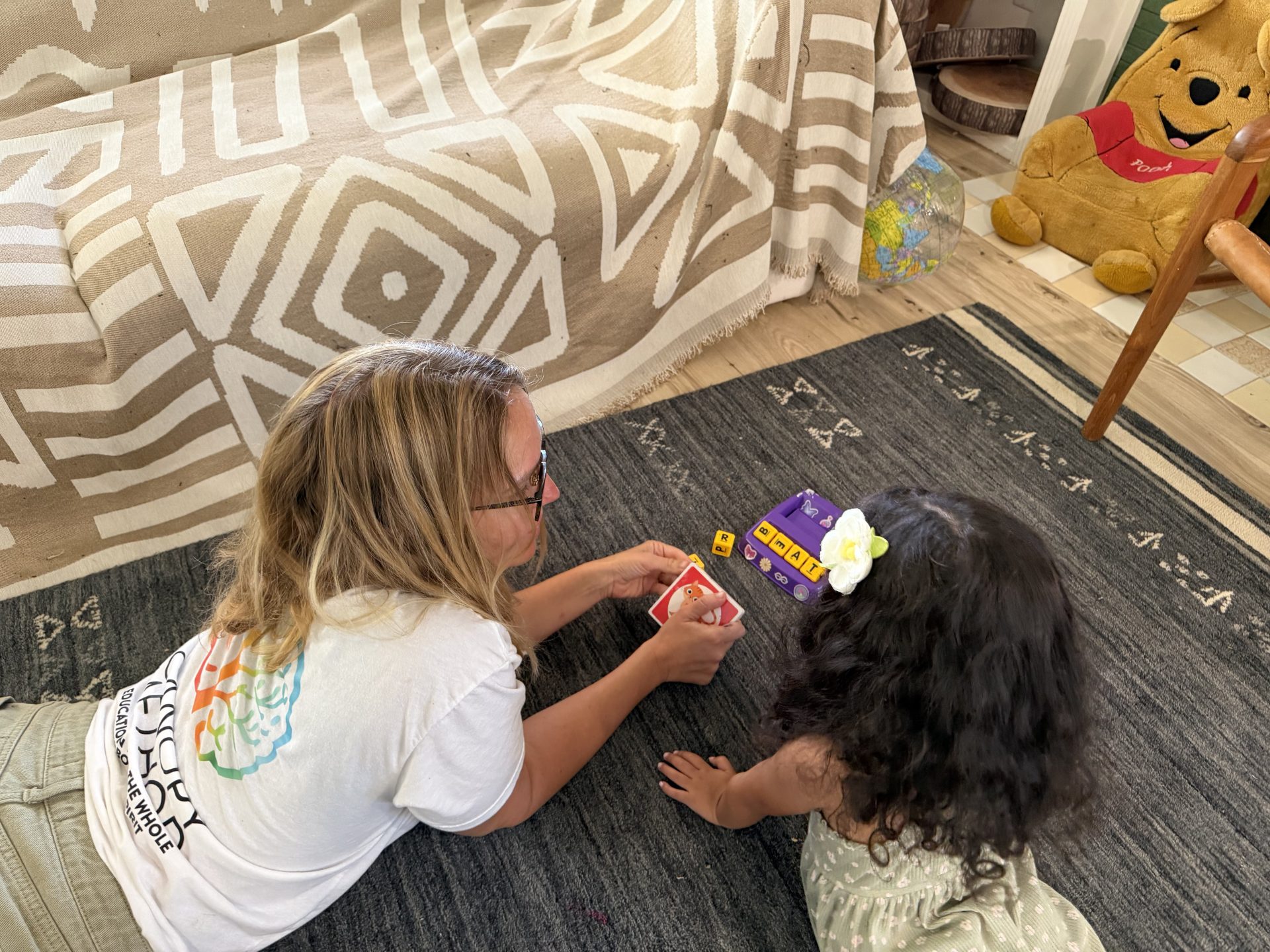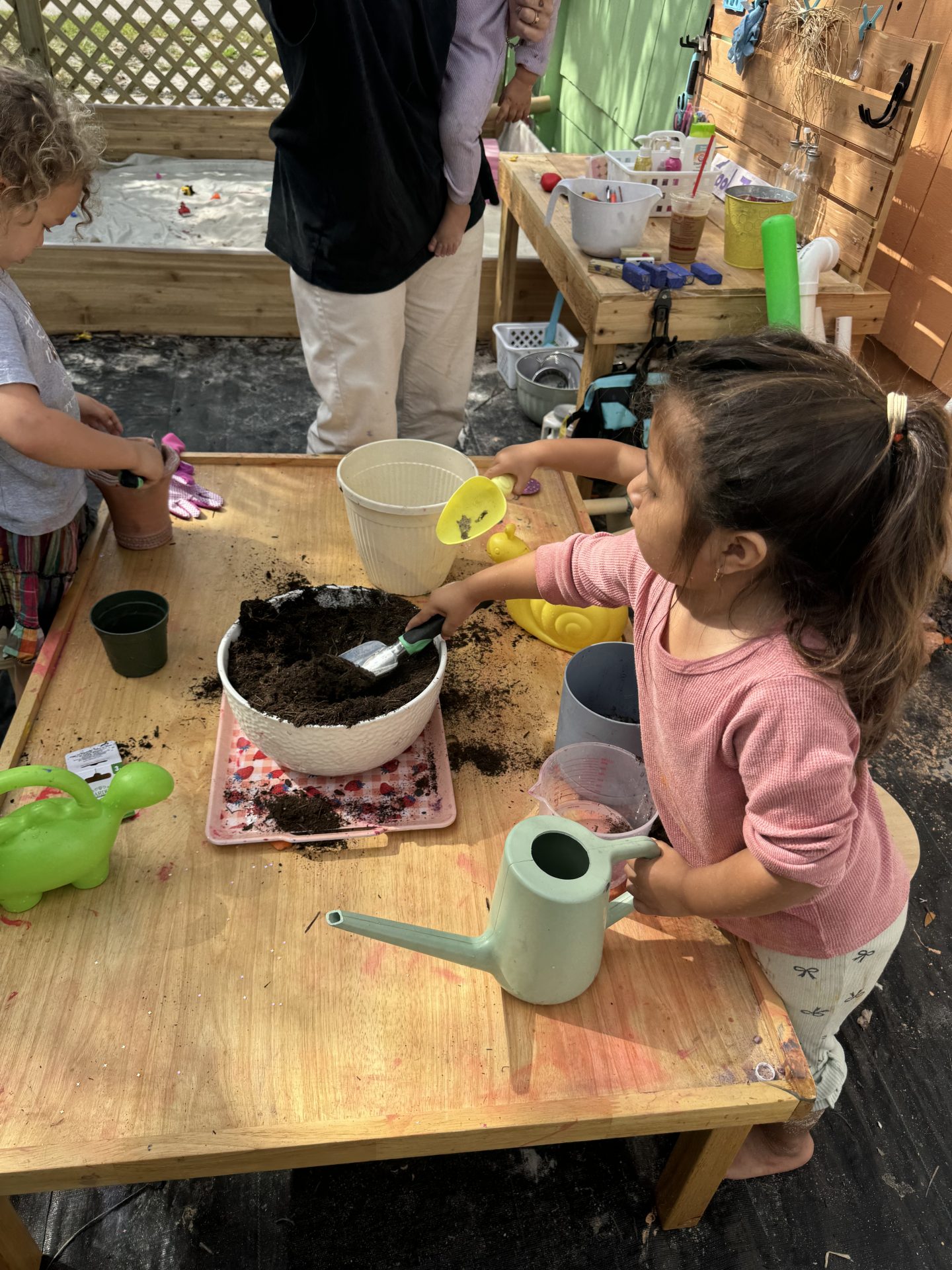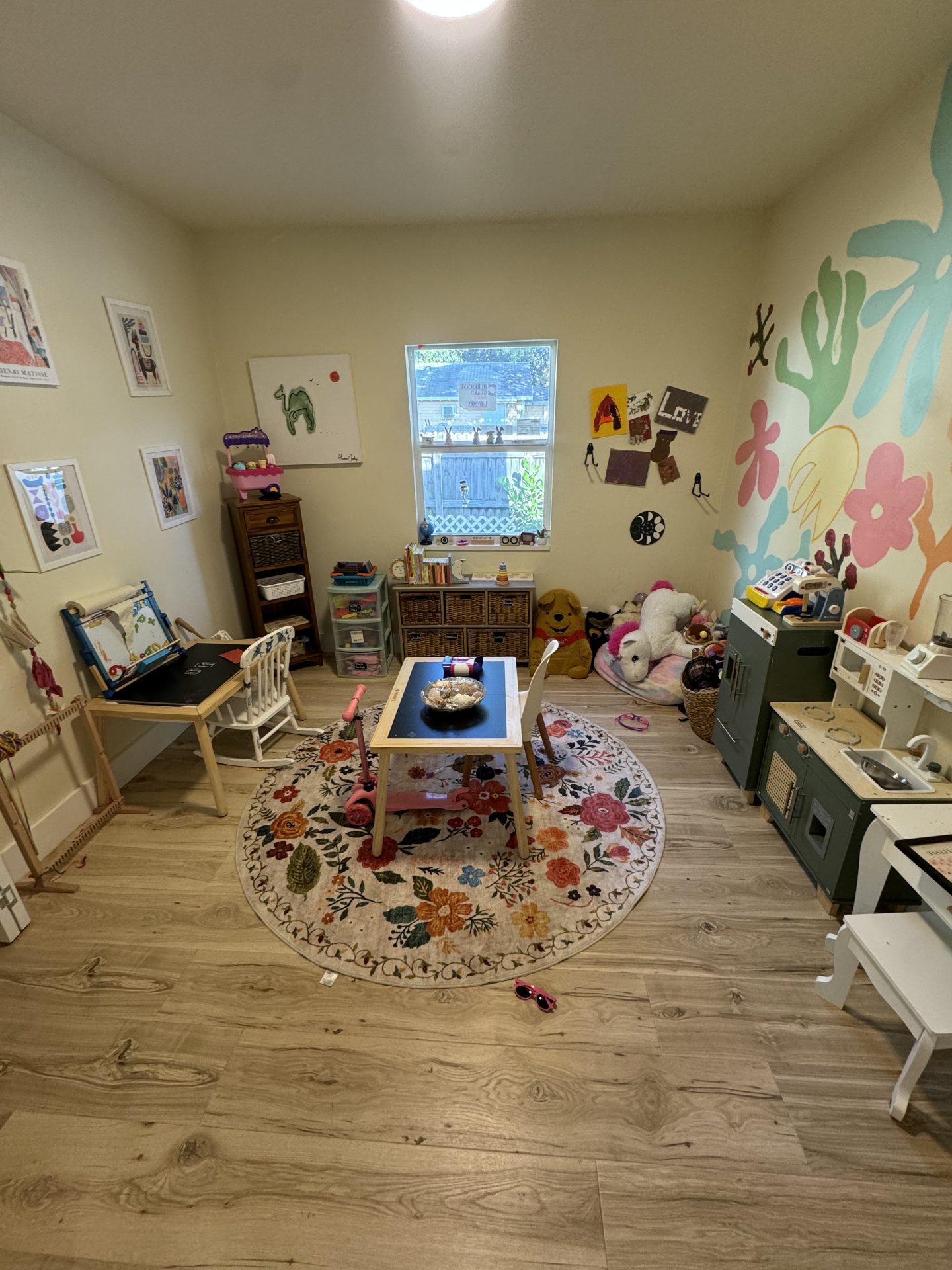
Our pedagogy is built on decades of research in neuroscience, developmental psychology, and education. Below is what we do — and the research that supports it.
We delay formal academic instruction until the brain is ready.
Pushing formal academics earlier does not produce stronger long-term learners. A landmark Stanford study found that delaying kindergarten by one year reduced inattention and hyperactivity at age 7, with effects still measurable at age 11. Children who learn to read at seven catch up to those who learn at five — with no long-term disadvantage. Today’s kindergarten contains more academic content and less play than first grade did 20 years ago.
- Dee, T. S., & Sievertsen, H. H. (2018). The gift of time? School starting age and mental health. Health Economics, 27(5), 781–802.
- Suggate, S., Schaughency, E., & Reese, E. (2013). Children learning to read later catch up to children reading earlier. Early Childhood Research Quarterly, 28(1), 33–48.
- Whitebread, D., & Bingham, S. (2014). School starting age: The evidence. University of Cambridge.
- Bassok, D., Latham, S., & Rorem, A. (2016). Is kindergarten the new first grade? AERA Open, 2(1).
- Layton, T. J., et al. (2018). ADHD and month of school enrollment. New England Journal of Medicine, 379, 2122–2130.
- NAEYC. (2020). Developmentally appropriate practice position statement.
We prioritize emotional safety as the foundation of learning.
Children in chronic states of stress, fear, or shame cannot consistently access higher-order learning — this is neurology, not preference. The Adverse Childhood Experiences (ACEs) research established that early adversity has lifelong effects on health and mental health. Subsequent research has confirmed the mechanism: chronic stress alters the developing brain. The good news is that stable, attuned adult relationships interrupt the damage.
- Felitti, V. J., et al. (1998). Adverse childhood experiences. American Journal of Preventive Medicine, 14(4), 245–258.
- van der Kolk, B. (2014). The body keeps the score. Viking.
- Perry, B. D. (2009). Examining child maltreatment through a neurodevelopmental lens. Journal of Loss and Trauma, 14(4), 240–255.
- Shonkoff, J. P., et al. (2012). The lifelong effects of early childhood adversity and toxic stress. Pediatrics, 129(1), e232–e246.
- Center on the Developing Child at Harvard. Toxic stress and Brain architecture. Porges, S. W. (2011). The polyvagal theory. Norton.
We build school connectedness as a core protective factor.
Students who feel connected to their school are protected against virtually every adverse outcome we measure — depression, suicidality, substance use, violence, dropout. This is the most replicated finding in adolescent prevention research, holding across nearly 30 years and dozens of replications. A 2024 study found that school connectedness at age 11 actually disrupts the pathway from childhood adversity to adolescent mental illness.
- Resnick, M. D., et al. (1997). Protecting adolescents from harm. JAMA, 278(10), 823– 832.
- Goetschius, L. G., et al. (2024). School connectedness as a protective factor between childhood adversity and adolescent mental health outcomes. Development and Psychopathology.
- Steiner, R. J., et al. (2019). Adolescent connectedness and adult health outcomes. Pediatrics, 144, e20183766.
We center social-emotional learning across every classroom.
The largest analysis of school-based SEL ever conducted — 424 studies, more than 575,000 students, across 53 countries — found that SEL programs improve academic achievement, behavior, mental health, school climate, and peer relationships simultaneously. The old framing of “rigor versus emotional development” is not a real tradeoff. The research shows they rise together.
- Cipriano, C., et al. (2023). The state of evidence for social and emotional learning: A
- contemporary meta-analysis. Child Development, 94(5), 1181–1204.
- Durlak, J. A., et al. (2011). The impact of enhancing students’ social and emotional learning. Child Development, 82(1), 405–432.
- CASEL. What is SEL?
- Immordino-Yang, M. H., & Damasio, A. (2007). We feel, therefore we learn. Mind, Brain, and Education, 1(1), 3–10.
We honor identity formation as essential to motivation and well-being.
Adolescents who develop self-transcendent purpose — the sense that what they’re learning matters beyond themselves — show measurable, durable improvements in academic self regulation. A 2024 longitudinal study confirmed that purpose can be built through structured self-driven learning. Identity is not a side project of education; the research shows it’s increasingly what learning depends on.
- Yeager, D. S., et al. (2014). Boring but important: A self-transcendent purpose for learning fosters academic self-regulation. Journal of Personality and Social Psychology, 107(4), 559–580.
- Ratner, K., et al. (2024). Trajectories and predictors of adolescent purpose development in self-driven learning. Child Development.
- Damour, L. (2023). The emotional lives of teenagers. Ballantine.
- Deci, E. L., & Ryan, R. M. (2000). Self-determination theory. Psychological Inquiry, 11(4), 227–268.
We protect play as cognitive infrastructure.
The American Academy of Pediatrics has formally classified play as essential to brain development — not optional, not a luxury, a clinical recommendation. Play is the primary mechanism by which young children develop executive function, emotional regulation, creativity, and problem-solving. The decline of unstructured play tracks closely with the rise of childhood and adolescent psychopathology over the past several decades.
- Yogman, M., et al. (2018). The power of play. Pediatrics, 142(3).
- Hirsh-Pasek, K., et al. (2009). A mandate for playful learning in preschool. Oxford.
- Whitebread, D. (2012). The importance of play. University of Cambridge.
- Gray, P. (2011). The decline of play and the rise of psychopathology in children and adolescents. American Journal of Play, 3(4), 443–463.
- Ginsburg, K. R. (2007). The importance of play. Pediatrics, 119(1), 182–191.
We teach in nature, by season, daily.
Nature-based instruction outperforms traditional classroom instruction across academic outcomes — and the largest gains are observed in low-income and historically marginalized students. The mechanisms are well-mapped: improved attention, lower stress, better peer dynamics, and developmentally beneficial play. Nearby nature also buffers life stress in children.
- Kuo, M., Barnes, M., & Jordan, C. (2019). Do experiences with nature promote learning? Frontiers in Psychology, 10, 305.
- Wells, N. M., & Evans, G. W. (2003). Nearby nature: A buffer of life stress among rural children. Environment and Behavior, 35(3), 311–330.
- Chawla, L. (2015). Benefits of nature contact for children. Journal of Planning Literature, 30(4), 433–452.
- Children & Nature Network. (2022). Nature-based learning research digest.
We immerse students in multiple languages from early childhood.
Early childhood is a sensitive window for language acquisition, and exposure to multiple languages during this window builds measurable cognitive advantages — particularly in auditory processing, metalinguistic awareness, and certain aspects of working memory. Language richness in early childhood is also one of the strongest predictors of later academic success.
- Kuhl, P. K. (2011). Early language learning and literacy. Nature Reviews Neuroscience, 5(11), 831–843.
- Bialystok, E. (2001). Bilingualism in development. Cambridge.
- Hart, B., & Risley, T. R. (1995). Meaningful differences in the everyday experience of young American children. Brookes.
We make music a core part of every child’s education.
Music training reliably improves auditory processing, working memory, and executive function in young children, and it strengthens the neural pathways that support reading. Music engages an unusually broad network of brain regions simultaneously — auditory, motor, emotional, memory, and reward systems all activate together — which is why it functions as one of the most integrative cognitive activities available to the developing brain.
- Moreno, S., et al. (2011). Short-term music training enhances verbal intelligence and executive function. Psychological Science, 22(11), 1425–1433.
- Tierney, A., & Kraus, N. (2013). Music training for the development of reading skills. Progress in Brain Research, 207, 209–241.
- Patel, A. D. (2008). Music, language, and the brain. Oxford.
We build executive function and life skills through real-world practice.
Executive function — the brain’s system for planning, focus, self-regulation, and follow through — is one of the strongest predictors of long-term well-being and life outcomes. The research is clear that executive function is built through experience and practice, not lecture or testing. Self-determined learning, where students experience real autonomy, competence, and connection, produces the conditions under which intrinsic motivation actually develops.
- Diamond, A. (2010). The evidence base for improving school outcomes. Early Education and Development, 21(5), 780–793.
- Deci, E. L., & Ryan, R. M. (2000). Self-determination theory. Psychological Inquiry, 11(4), 227–268.
- Dweck, C. S. (2006). Mindset: The new psychology of success. Random House.
We design adolescent education around purpose, identity, and capstone work.
Adolescent neuroscience has redefined adolescence as a sensitive developmental period — a window of heightened neural plasticity, social sensitivity, and capacity for transformation. The same brain that is vulnerable during these years is the brain most capable of being shaped by purpose, mentorship, and meaningful work. Brief interventions that align with adolescent developmental needs produce durable, measurable changes in academic and behavioral outcomes.
- Crone, E. A., & Dahl, R. E. (2012). Understanding adolescence as a period of social affective engagement and goal flexibility. Nature Reviews Neuroscience, 13, 636–650.
- Yeager, D. S., et al. (2019). A national experiment reveals where a growth mindset improves achievement. Nature, 573, 364–369.
- Ratner, K., et al. (2024). Child Development.
- Steinberg, L. (2014). Age of opportunity: Lessons from the new science of adolescence. Houghton Mifflin Harcourt.
- ABCD Study Consortium. (2023). Developmental Cognitive Neuroscience.
We treat teachers as the most important variable in the system.
The largest synthesis of educational research ever conducted found that teacher quality is the single most powerful in-school factor affecting student outcomes. Children co-regulate with the adults around them, and the emotional state of the teacher directly shapes the emotional and cognitive availability of the student. Investing in teachers — their well-being, their training, their pay — is investing in everything else.
- Hattie, J. (2009). Visible learning: A synthesis of over 800 meta-analyses relating to achievement. Routledge.
- Pianta, R. C. (1999). Enhancing relationships between children and teachers. APA. Cozolino, L. (2013). The social neuroscience of education. Norton.